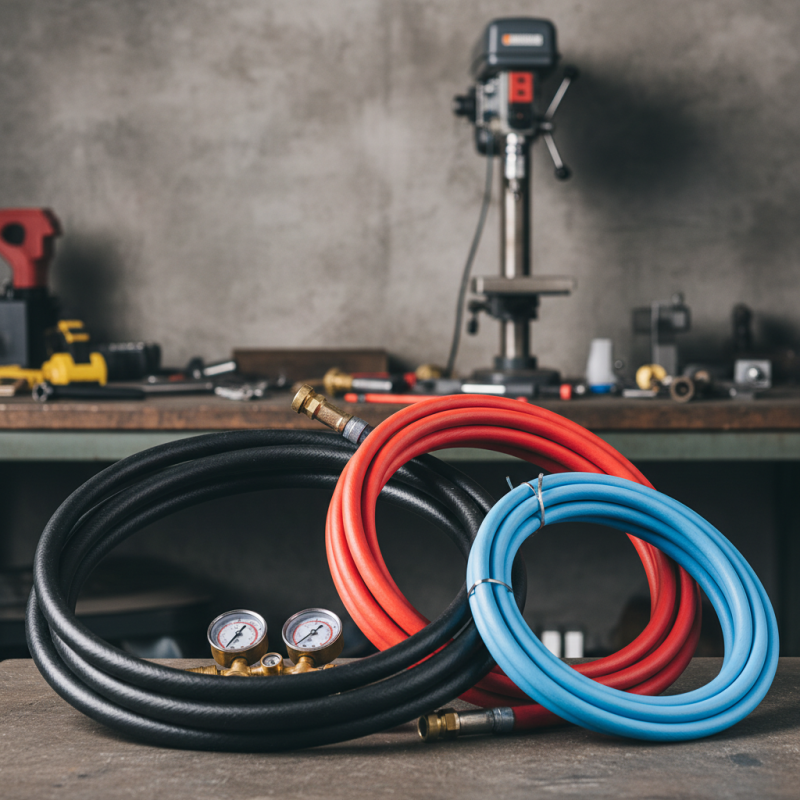
How to Choose the Best Rubber Air Hose for Your Needs?
Choosing the right rubber air hose is crucial for various applications. The global air hose market is projected to reach $1.8 billion by 2025. This growth highlights the importance of selecting durable and efficient products.
When considering a rubber air hose, factors such as pressure rating, length, and flexibility come into play. For example, hoses can handle pressures from 50 to 200 PSI or more. However, not all hoses meet these specifications equally. Some may crack or wear out sooner than expected.
Users should consider their specific needs. A rubber air hose for heavy industrial use differs greatly from one for light DIY tasks. Choosing the wrong type can lead to inefficiencies and increased costs. Reflecting on these choices can enhance performance and longevity in any project.
Understanding Different Types of Rubber Air Hoses Available in the Market
When choosing a rubber air hose, understanding the types available is key. Generally, there are two main types: compact and standard. Compact hoses are lightweight and easy to maneuver, ideal for quick jobs. They can be less durable, though. Standard hoses often offer more resilience but can be bulkier. Choosing the right one depends on your specific needs.
Another factor is hose diameter. A thick hose can deliver more airflow, while a smaller one is easier to handle. Think about the tools you'll use. If they're high-demand, opt for a larger diameter. Different lengths also matter. Longer hoses provide flexibility, but they might lead to pressure loss. Consider how often you'll move around.
Don’t overlook the temperature rating of the hose. Some areas require heat resistance, others do not. For outdoor tasks, a weather-resistant hose is crucial. Remember, not all hoses claim to be suitable for every environment. Reflect on your typical usage to avoid regret later. It’s important to match the hose to your tasks accurately for efficiency and longevity.
Key Factors to Consider When Selecting a Rubber Air Hose
When selecting a rubber air hose, several key factors come into play. The hose's diameter is crucial. A standard diameter such as 1/4 inch can support common tools. However, larger diameter hoses like 3/8 inch or 1/2 inch may reduce pressure loss over longer distances. According to industry reports, a larger diameter can increase airflow by nearly 30%. This enhances tool performance significantly.
Next, consider the hose's length. A longer hose offers better flexibility but may result in pressure drops. A report from the Hose Manufacturers Association indicates that every additional 50 feet can reduce pressure by about 5 PSI. This is vital for pneumatic tools. Factors like working pressure also matter. Most rubber air hoses are rated for at least 300 PSI. Using hoses below this rating can lead to dangerous situations.
Lastly, the material quality shouldn't be overlooked. A high-quality rubber hose is resistant to abrasions. It can withstand extreme temperatures. However, not all hoses meet this standard, leading to premature wear and tear. A survey showed that 20% of users reported durability issues with lower-quality options. Reflecting on these factors can lead you to the right rubber air hose that meets your specific needs.
How to Choose the Best Rubber Air Hose for Your Needs? - Key Factors to Consider When Selecting a Rubber Air Hose
| Dimension | Material | Pressure Rating (psi) | Temperature Range (°F) | Length Options (ft) | Weight (lbs) |
| 1/4" x 25' | Rubber | 300 | -20 to 150 | 25 | 3.5 |
| 3/8" x 50' | Synthetic Rubber | 400 | -10 to 180 | 50 | 5.0 |
| 1/2" x 100' | EPDM Rubber | 500 | -40 to 212 | 100 | 9.5 |
| 3/8" x 25' | Reinforced Rubber | 300 | -20 to 140 | 25 | 3.0 |
| 1/4" x 50' | Neoprene Rubber | 250 | -5 to 150 | 50 | 4.0 |
Assessing Hose Diameter and Length for Your Specific Needs
When selecting a rubber air hose, hose diameter and length are crucial. A suitable diameter impacts airflow. A smaller diameter can restrict flow. Contrarily, a larger diameter allows more air. Consider your tools and requirements. For most tasks, a 1/4-inch to 3/8-inch diameter works well. However, heavy-duty applications may need a larger size. Too small might lead to inefficiency.
Length is also important. A longer hose provides more reach but can introduce pressure loss. Think about your workspace. If you frequently move around, choose a longer hose. For stationary setups, a shorter hose may be sufficient. It’s easy to overlook the length. People often buy longer hoses but rarely need that much.
Evaluate your needs closely. Do you need flexibility or pressure consistency? Sometimes, a shorter hose offers better performance for specific tasks. Consider storage as well. A long hose can become cumbersome. Choose wisely to avoid frustration. Reflect on your past experiences. Have you struggled with a too-short or too-long hose? Adjust your choice based on what you’ve learned.
Evaluating Pressure Ratings and Temperature Resistance
When choosing a rubber air hose, pressure ratings and temperature resistance are critical factors. The maximum working pressure is a key consideration. Most rubber air hoses handle pressures between 150 to 300 PSI. Higher ratings offer better durability and performance. For example, a hose rated at 300 PSI can support more demanding applications. However, be wary of frequent pressure spikes. They can degrade hose integrity over time.
Temperature resistance is another essential aspect. Typical rubber hoses operate well between -40°F and 150°F. However, extreme temperatures can cause hoses to crack or become brittle. A detailed study by industry experts revealed that exposure to temperatures above 200°F can reduce the lifespan of rubber hoses by nearly 40%. Additionally, factors like UV exposure or chemicals can compromise material integrity.
Selecting the right temperature range for your application is vital. Not all applications require the same heating or cooling capacities. Some work environments might expose hoses to rapid temperature shifts. This inconsistency can lead to unexpected failures. It’s crucial to reflect on your operational environment. Prioritize hoses that align with both pressure and temperature guidelines for optimal performance.
Pressure Ratings and Temperature Resistance of Rubber Air Hoses
Comparing Durability and Flexibility of Rubber Air Hoses
When choosing a rubber air hose, it’s crucial to compare durability and flexibility. Rubber hoses can withstand various conditions, making them ideal for different applications. Reports indicate that hoses with a thicker wall can last up to five times longer under harsh conditions. However, thicker hoses may compromise flexibility, affecting maneuverability.
Tip: Always consider the environment where the hose will be used. Flexible hoses perform better in cold temperatures. If you frequently move your hose, flexibility is key. A recent study highlighted that 70% of users reported easier handling with lighter hoses, despite sacrificing some durability.
Moreover, not all rubber materials are made equal. Some may crack under high pressure, while others remain intact. Pay attention to the quality of rubber and the manufacturing process. Many users have experienced frustration due to poor-quality hoses. It’s wise to balance your need for a hose that is tough yet manageable. Reviewing user feedback can help make an informed decision.