Blog
What Is a Holographic Foil Machine and How Does It Work?
A Holographic Foil Machine creates reflective, three-dimensional patterns on paper, films, labels, and selected packaging materials. Instead of printing ordinary ink, it transfers a holographic foil layer through controlled heat, pressure, and registration. The finished surface may shimmer when viewed from different angles, creating movement beneath changing light.
The process begins with a prepared design and a compatible foil roll. An operator sets the temperature, pressure, speed, and feeding tension. The machine then guides the substrate through heated rollers or a stamping unit. Microscopic patterns on the foil separate from its carrier film and bond to the target surface. Precise alignment matters. Even a small shift can make text appear uneven or break a repeating image. Some systems use digital controls, while others still depend heavily on an experienced technician’s adjustments.
It looks straightforward.
In practice, material choice changes everything. Coated paper, synthetic film, and textured stock can react differently to heat and pressure. Dust, moisture, or uneven feeding may create gaps, wrinkles, or dull areas. Quality checks should examine brightness, adhesion, registration, and surface consistency under direct and angled light. Manufacturers should also follow equipment instructions, ventilation guidance, and workplace safety procedures.
This article explains how a Holographic Foil Machine works, what its main components do, and where production problems commonly appear. It also considers practical limitations, because a striking holographic effect does not automatically mean reliable or economical output. Real results depend on the machine, materials, operator skill, and careful testing before full production.
What Is a Holographic Foil Machine?
A holographic foil machine is equipment that transfers a three-dimensional light pattern onto paper, plastic, labels, or other suitable surfaces. The pattern is stored in a thin holographic foil, which contains microscopic embossed structures. These structures bend and reflect light, creating shifting colors, depth, or motion as the viewing angle changes. It is a physical finishing process, not a digital image printed directly onto the material.
The machine usually combines controlled heat, pressure, and accurate foil movement. A heated plate or roller activates the foil’s coating, while pressure bonds the patterned layer to the surface. The substrate must remain flat and clean. Dust, uneven pressure, or incorrect temperature can produce dull areas, wrinkles, or incomplete transfers. Small adjustments matter.
Some machines use rolls for continuous production, while others use sheets for shorter runs. Operators check temperature, speed, pressure, and alignment before processing a full batch. The result can improve visual appeal and help reveal unauthorized alterations, although holographic effects alone do not guarantee product security. That point is easy to overlook. Foil compatibility also varies between coated paper, synthetic films, and textured materials. In practice, testing a small sample is safer than trusting general settings. Even experienced operators may need several trials because humidity, surface texture, and machine condition can change the outcome.
What Are the Main Components of a Holographic Foil Machine?
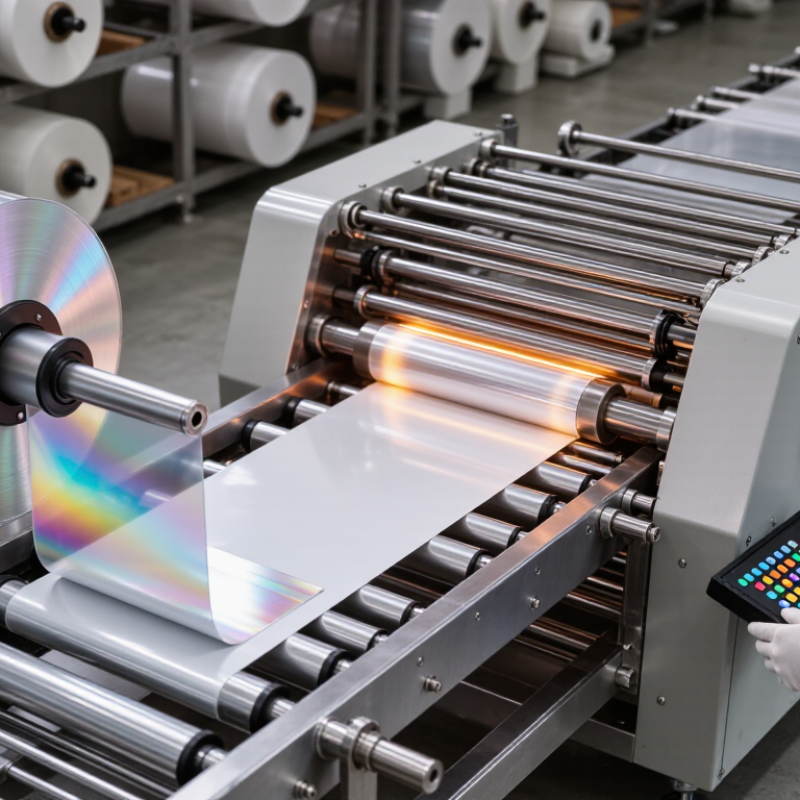
A holographic foil machine transfers a microscopic optical pattern onto film, paper, or coated packaging stock. Its main components work as one controlled web-processing system. The unwinding unit feeds the substrate from a roll. A tension controller keeps the web stable. Even a small tension change can distort registration.
The coating or adhesive station prepares the surface for transfer. Next, a heated embossing cylinder presses the holographic pattern into the foil. A pressure nip supports this contact. Temperature, pressure, and line speed must remain balanced. Heat matters. Too much heat can deform thin film, while insufficient heat may create weak images. The rewinding unit then collects the finished web without wrinkles. According to Smithers’ packaging outlook reports, premium and security-focused packaging applications continue to support demand for decorative and optically variable films through the decade. The report also emphasizes process consistency as a major quality factor.
Modern machines usually add a PLC control system, servo motors, edge guides, and optical inspection cameras. These parts monitor registration, speed, tension, and surface defects. A 2024 market analysis from Grand View Research places the broader holographic films sector on a growth path of about 6% annually, although estimates differ by application and region. That difference deserves attention. Market forecasts are useful, but they cannot replace production trials. In practice, substrate thickness, adhesive behavior, and ambient humidity can change results. Alignment matters. Operators still need judgment when the sensor readings look acceptable, but the foil appears uneven under angled light.
How Does a Holographic Foil Machine Work Step by Step?
A holographic foil machine transfers a thin, reflective film onto paper, plastic, or coated board. It combines controlled heat, pressure, and precise film movement. The finished surface can show shifting colors, depth, or fine optical patterns. Grand View Research forecasts the holographic films market to grow at about 6% annually from 2024 to 2030. Smithers also identifies premium appearance and packaging authentication as continuing market drivers through 2028.
The process starts with artwork preparation and foil selection. The operator checks the substrate, foil width, and pattern direction. The machine then feeds the substrate and foil through aligned rollers. A heated die or embossing cylinder softens the coating. Pressure presses the optical pattern onto the surface. The foil carrier separates during the next movement. Registration sensors correct small position changes between printed graphics and holographic elements. Temperature and pressure must match the material. Too much heat can distort the image. Too little pressure creates weak transfer.
Quality inspection follows immediately. Operators examine gloss, pattern continuity, edge sharpness, and adhesion under angled light. A hand lens often reveals defects that normal lighting hides. The difficult part is consistency. Humidity, substrate tension, and roller wear can change results during one production run. Even experienced operators may over-adjust the machine while chasing brighter effects. That mistake wastes foil. A better practice uses recorded settings, test sheets, and measured adjustments.
What Is a Holographic Foil Machine and How Does It Work? - How Does a Holographic Foil Machine Work Step by Step?
| Step | Machine Function | How It Works | Main Variables | Typical Operating Information | Result or Quality Check |
|---|---|---|---|---|---|
| 1 | Substrate preparation | Paper, coated board, plastic film, or another compatible substrate is cleaned, dried, and positioned for feeding. | Surface energy, moisture, flatness, thickness, dust level | The material must be smooth and stable enough to receive heat, pressure, and foil transfer. | No visible dust, wrinkles, excessive moisture, or surface contamination |
| 2 | Foil unwinding | A roll of holographic foil is mounted on an unwind shaft and guided toward the transfer area. | Roll direction, web alignment, tension, foil width, repeat length | Tension control prevents stretching, slack, edge wandering, and pattern distortion. | Foil travels smoothly with consistent lateral alignment |
| 3 | Registration and web guiding | Sensors, guide rollers, or servo-driven systems align the foil pattern with the printed or embossed artwork. | Registration mark position, line speed, sensor sensitivity, lateral offset | The registration system compensates for small changes in foil position and substrate movement. | Holographic images appear in the intended location without noticeable drift |
| 4 | Heating or activation | A heated die, heated cylinder, or thermal roller brings the foil adhesive layer to its activation temperature. | Temperature, dwell time, heating uniformity, line speed | Many hot-stamping processes operate approximately between 90°C and 180°C, depending on foil, substrate, and equipment. | Adhesive is sufficiently activated without scorching, shrinking, or damaging the substrate |
| 5 | Embossing or pattern contact | A patterned die, shim, roller, or embossing cylinder contacts the foil and substrate to create or transfer the optical structure. | Die geometry, contact pressure, nip setting, surface hardness | Microscopic grooves or diffraction structures redirect light and produce the holographic appearance. | Pattern is sharp, continuous, and free from crushed or incomplete areas |
| 6 | Pressure application | Controlled pressure bonds the activated foil layer to selected areas of the substrate and transfers the design. | Pressure level, pressure distribution, contact time, substrate thickness | Pressure must be high enough for complete transfer but low enough to avoid substrate marking or foil squeeze-out. | Uniform adhesion with clean edges and consistent visual brightness |
| 7 | Cooling and release | The foil and substrate separate from the die or roller after transfer, while the adhesive cools and stabilizes. | Cooling rate, release angle, peel tension, surface temperature | Stable release reduces lifting, smearing, blisters, and distortion of fine details. | Transferred areas remain firmly attached during foil peeling |
| 8 | Waste foil rewinding | The used carrier film is collected on a rewind shaft after the holographic layer has been transferred. | Rewind tension, roll diameter, waste width, splice condition | Synchronized unwinding and rewinding prevents web breaks and unnecessary foil waste. | Waste roll is compact, stable, and free from telescoping |
| 9 | Inspection and adjustment | The operator or an inline vision system checks registration, coverage, brightness, adhesion, and surface defects. | Color shift, missing transfer, pinholes, wrinkles, scratches, registration error | Temperature, pressure, speed, and tension are adjusted in small increments to correct defects. | Consistent holographic effect across the production run |
| 10 | Finished material handling | The finished sheets or web are conveyed, stacked, slit, rewound, or sent to a later converting process. | Stack alignment, surface protection, drying or curing time, handling speed | Finished pieces should be protected from abrasion, excessive heat, moisture, and blocking during storage. | Clean, durable, accurately registered holographic decoration ready for further processing |
What Materials Can Holographic Foil Machines Process?
Holographic foil machines can process more than paper. Their success depends on substrate, coating, heat tolerance, and surface smoothness. Common materials include coated paper, folding carton board, synthetic labels, and some plastic films. Each material receives a thin reflective layer through controlled heat and pressure. The foil may create rainbow patterns, metallic depth, or a moving image effect. On a textured sheet, however, tiny gaps can interrupt the pattern. That detail is easy to miss during planning.
Paper and carton board are usually the most forgiving choices. They support invitations, product boxes, tags, and book covers with crisp results. Laminated stocks can also work, but the laminate must bond firmly under operating heat. Suitable plastic films include selected polyester or polypropylene grades. They should be dimensionally stable and prepared for decoration. Uncoated paper may absorb heat unevenly, while soft films can wrinkle beneath the heated plate. From practical testing, a small sample run is more reliable than assumptions from a material label. Results can still vary between production batches.
Tips: Check the supplier’s temperature range before loading a new substrate. Test adhesion by rubbing a decorated area after cooling. Keep the sheet flat and free from dust. Reduce pressure when fine details begin to spread. Record foil, temperature, pressure, and speed for repeatable settings. I sometimes expect one setting to transfer perfectly, but material changes prove otherwise. Careful notes prevent repeated waste.
How Are Holographic Foil Machines Used in Different Industries?
A holographic foil machine transfers a thin patterned film onto paper, board, plastic, or coated materials. It uses controlled heat, pressure, and timing to bond the foil to selected areas. The machine usually feeds the substrate through heated rollers or a stamping unit. A release layer separates the holographic pattern from its carrier film. When settings are correct, the surface shows shifting colors as light moves across it. Small changes matter. Excessive heat can blur fine details, while weak pressure may leave broken images.
Different industries use this process for both appearance and practical identification. Packaging manufacturers add holographic effects to cartons, labels, and gift boxes to create shelf contrast. Cosmetic packaging often uses silver, rainbow, or geometric patterns around logos and borders. Electronics companies may apply reflective details to product labels and warranty materials. Publishers use foil on covers, certificates, and promotional cards where tactile quality matters. Security printing can combine holographic features with serial numbers and controlled production records for authorized documents. In my experience, the best results come from testing the exact material before full production. A foil that looks sharp on coated paper may appear dull on textured board. This is easy to overlook. Operators should inspect registration, adhesion, color consistency, and waste levels throughout the run. The process can be efficient, but it is not automatically precise.