
Blog
China Top Bridge Gantry Manufacturers for Global Buyers
China has become a major sourcing base for Bridge Gantry systems used in ports, shipyards, steel plants, precast yards, and heavy manufacturing facilities. Its manufacturers offer broad engineering capabilities, from compact workshop gantries to massive outdoor machines handling several hundred tonnes. Yet factory scale alone proves little. A reliable supplier must connect design calculations, fabrication control, inspection records, installation support, and long-term service.
W. Edwards Deming, a respected quality-management expert, said, “Quality comes not from inspection, but from the improvement of the production process.” That principle matters when evaluating Bridge Gantry manufacturers. Buyers should examine welding procedures, structural steel grades, trolley alignment, wheel loads, brake performance, electrical protection, and emergency-stop systems. Ask for load-test evidence. Request drawings before payment. Check how the supplier manages corrosion, wind exposure, temperature changes, and local power requirements.
The strongest Chinese manufacturers usually provide customized spans, lifting speeds, control modes, and duty classifications. They also understand that international projects require clearer documentation, practical communication, and dependable spare-parts planning. A supplier may quote an attractive price, but hidden costs can appear during commissioning. This is where careful comparison becomes essential. No shortlist is flawless. Even experienced buyers can overlook foundation tolerances or maintenance access. The best purchasing decision balances price with verified engineering competence, transparent production evidence, and responsive after-sales support. This guide introduces China’s leading Bridge Gantry manufacturers and explains how global buyers can assess them with greater confidence, fewer assumptions, and a more realistic view of project risk.
Bridge Gantry Systems: Definition, Types, and Industrial Applications
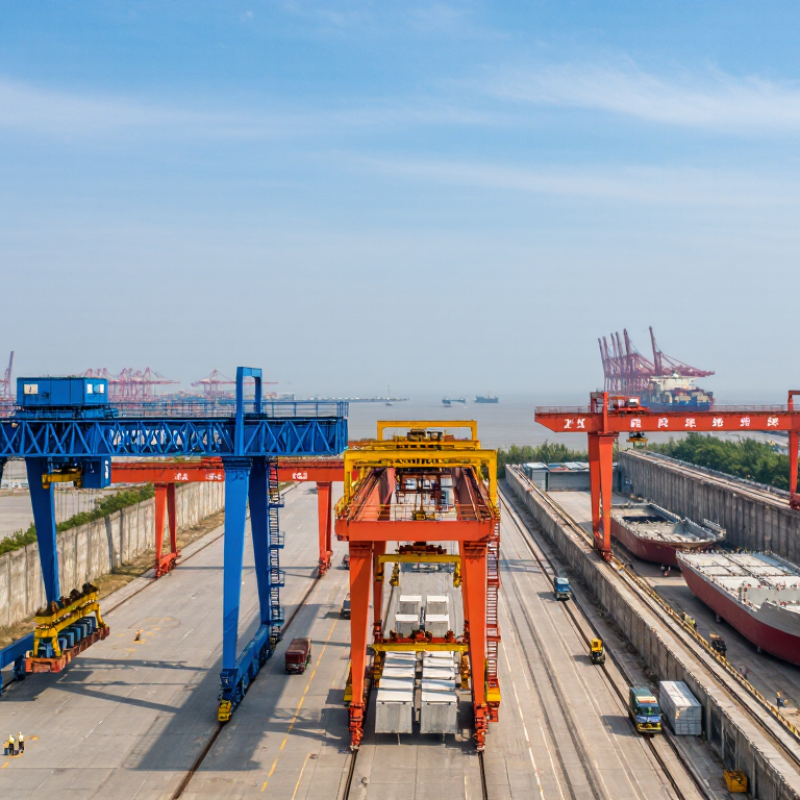
Bridge gantry systems are overhead lifting structures with a movable bridge supported by legs or end trucks. They transfer loads across open work areas without relying on building columns. Unlike fixed cranes, gantry systems can operate outdoors, inside workshops, or across temporary sites. Common designs include single-girder, double-girder, rubber-tyred, and rail-mounted gantries. Single-girder models suit lighter loads and moderate spans. Double-girder systems handle heavier loads and demanding duty cycles. Rubber-tyred units offer flexible movement, while rail-mounted models provide precise travel.
Industrial applications are broad. Shipyards use gantries to position steel plates and engines. Construction sites lift precast sections, rebar cages, and equipment. Factories handle molds, coils, machining fixtures, and finished assemblies. Ports and logistics yards often require high lifting capacity, long travel distances, and reliable outdoor operation. The working environment matters. Salt air, dust, heat, and uneven ground can change the equipment specification significantly.
A practical warning: capacity alone is not enough. Buyers should check span, lifting height, duty class, travel speed, power supply, and emergency controls. Experienced manufacturers should provide load charts, inspection records, structural calculations, and clear maintenance instructions. Field assessments also help reveal blind spots, especially around foundation design and operator visibility. No layout is perfect. A low-cost choice may create expensive delays later. Buyers should compare engineering support, testing procedures, spare-part access, and documented quality controls before selecting a supplier for international delivery.
China Top Bridge Gantry Manufacturers for Global Buyers - Bridge Gantry Systems: Definition, Types, and Industrial Applications
Bridge gantry systems are overhead lifting systems supported by legs that run on floor-mounted rails or wheels. The specifications below summarize common industrial configurations and selection factors for global buyers. Actual performance depends on the engineered design, duty cycle, operating environment, and applicable safety standards.
| System Type | Definition and Structure | Typical Rated Capacity | Typical Span | Typical Lift Height | Travel Arrangement | Common Applications |
|---|---|---|---|---|---|---|
| Single-Girder Gantry Crane | One main girder supported by two legs, generally using a compact trolley and hoist. | Approximately 1–20 tonnes | Approximately 8–35 m | Approximately 6–18 m | Powered or manually guided long-travel movement on rails; cross travel through the trolley. | Workshops, maintenance bays, warehouses, equipment assembly, and light-to-medium fabrication. |
| Double-Girder Gantry Crane | Two parallel main girders provide greater rigidity, trolley support, and lifting headroom. | Approximately 10–500 tonnes | Approximately 10–40 m | Approximately 9–30 m | Motor-driven rail travel with an electric trolley and hoist; optional auxiliary hoist may be installed. | Heavy manufacturing, steel handling, shipyards, power facilities, precast yards, and large machinery installation. |
| Rubber-Tyred Gantry Crane | A mobile gantry mounted on rubber tyres, allowing movement without permanent floor rails. | Approximately 10–100 tonnes | Approximately 15–35 m | Approximately 8–20 m | Tyre steering and drive; may use battery-electric, diesel-electric, or hybrid power systems. | Container yards, precast concrete handling, outdoor storage, shipbuilding, and flexible material movement. |
| Rail-Mounted Gantry Crane | A fixed-path gantry supported by legs and wheels that run on parallel ground rails. | Approximately 20–100 tonnes | Approximately 20–40 m | Approximately 10–30 m | Electric long-travel drive on rails, with trolley travel along the bridge girder. | Intermodal terminals, container depots, steel stockyards, heavy outdoor production, and logistics centers. |
| Portable Gantry Crane | A lightweight, height-adjustable frame that can be assembled, dismantled, or moved within a work area. | Approximately 0.5–10 tonnes | Approximately 2–10 m | Approximately 2–6 m | Manual movement on casters or powered movement on small wheels; usually used indoors. | Repair stations, laboratories, service areas, small workshops, and temporary lifting operations. |
| Container Gantry Crane | A high-clearance gantry designed to lift standardized intermodal containers using a spreader beam. | Approximately 30–70 tonnes under the spreader | Approximately 20–40 m | Approximately 12–30 m | Rail-mounted or rubber-tyred travel, with powered trolley and container spreader. | Ports, inland container terminals, rail freight yards, logistics hubs, and empty-container depots. |
| Shipyard Gantry Crane | A large-span, high-capacity gantry used for ship sections, hull blocks, and oversized marine equipment. | Approximately 50–1,200 tonnes | Approximately 30–200 m | Approximately 20–100 m | Heavy-duty rail travel with synchronized multi-drive systems and one or more lifting trolleys. | Shipbuilding, offshore structure fabrication, marine repair, and large-scale steel assembly. |
Key Technical and Purchasing Dimensions
| Dimension | What It Measures | Why It Matters to Buyers | Typical Selection Considerations |
|---|---|---|---|
| Safe Working Load | The maximum permitted lifted load under the specified operating conditions. | Prevents overload and supports safe handling of the heaviest planned load. | Include the load, lifting accessories, spreader, hooks, and any future capacity requirement. |
| Span | The horizontal distance between the gantry legs or runway rails. | Determines the coverage width and the required structural stiffness. | Match the span to the operating area while allowing clearance for columns, vehicles, and stored materials. |
| Lift Height | The vertical distance available for raising and positioning the load. | Controls stacking height, vehicle clearance, and access to production equipment. | Consider building height, roof obstructions, hook approach, container tiers, and required headroom. |
| Duty Classification | The expected frequency, load spectrum, and operating intensity of the crane. | Influences structural life, motor sizing, brakes, controls, and maintenance intervals. | Specify working hours per day, lifting cycles per hour, average load, peak load, and operating environment. |
| Hoisting Speed | The rate at which the hoist raises or lowers the load. | Affects cycle time, positioning accuracy, and production throughput. | Use variable-speed control when precise positioning or fragile loads are important. |
| Power Supply | The electrical characteristics required by motors, controls, and auxiliary equipment. | Ensures compatibility with the installation site and avoids costly electrical modifications. | Confirm voltage, frequency, phase, grounding, cable management, and local electrical regulations. |
| Control System | The method used to operate hoisting, trolley travel, gantry travel, and safety functions. | Impacts operator visibility, positioning, productivity, and safety management. | Choose pendant, radio remote, cabin, semi-automatic, or automated control according to the workflow. |
| Operating Environment | The physical and climatic conditions in which the gantry will operate. | Determines material protection, enclosure ratings, corrosion resistance, and temperature suitability. | Assess indoor or outdoor use, wind, rain, dust, salt spray, explosive atmospheres, and ambient temperature. |
| Safety Features | Devices and systems that limit unsafe motion or detect hazardous operating conditions. | Reduces operational risk and supports compliance with workplace safety requirements. | Consider overload protection, emergency stop, limit switches, anti-collision devices, brakes, alarms, and wind restraints. |
| Applicable Standards | The engineering, manufacturing, inspection, and operational rules used for the crane. | Provides a framework for design verification, testing, documentation, and acceptance. | Confirm the required national or regional rules, such as ISO, EN, FEM, ASME, CMAA, or local regulations. |